 Carsun


How To Care For Microfiber Towels
If you want to really maintain the microfiber towels in your hand and ensure that they do not hurt the paint surface and can maintain the abnormal water absorption, you must “open a small stove” when washing-take them out separately and never mix them with cotton or other clothes.
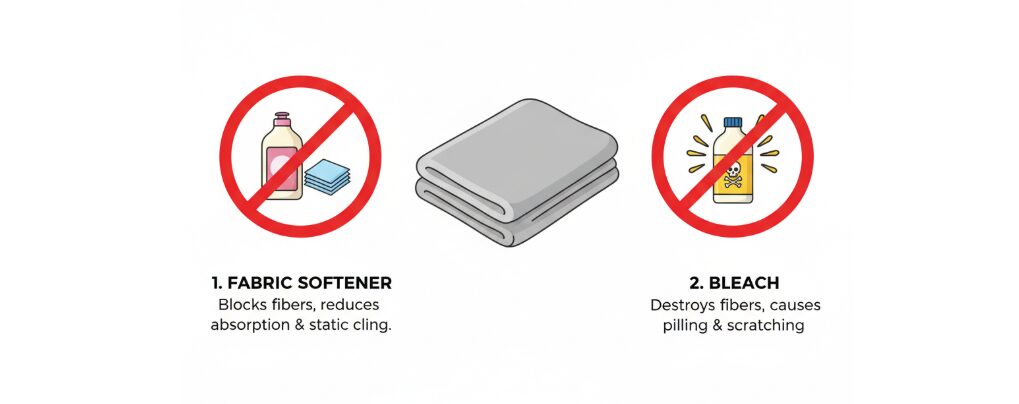
You need to use a special microfiber cleaner, or the “pure version” of the dye-free, fragrance-free laundry detergent, and set the washing machine to warm or cold water. There is a big taboo here: you must not use clothes softener or bleach, these additives will directly block the fiber opening structure of the fiber, and the towel’s ability to absorb dirt will be wasted. Finally, always choose natural air drying, or use the lowest temperature gear of the dryer. The high temperature will melt the fragile polyamide fiber. Once the fiber melts and hardens, the towel is basically destroyed.
Why Must Be Washed Separately: Microfiber vs Other Fabrics
In the process of learning to maintain microfiber towels, the first step is to strictly implement the “isolation policy”. Too many people wash towels mixed with flannel, cotton T-shirts and even jeans, which is a disaster.
Microfiber is designed to attract and grab debris, it is a powerful “suction magnet”. If you wash it with a cotton towel or clothes, the cotton fabric shedding lint will be caught by the microfiber. In my experience, once the cotton is embedded in the fiber, it is almost impossible to get it out. This turns your expensive high-end light-collecting towel into a rotten rag covered with wool. At this time, it will not only not clean the car, but will smear dirt on the paint surface.
Therefore, in order to ensure that the paint is not scratched, please be sure to let the microfiber towel “exclusive” washing machine.
Pick The Right Cleaner
When choosing a cleaner, the core logic is two words: simple. You can either buy a cleaning solution that specifically washes microfiber, or you can choose a clear laundry liquid that is free of fragrance and pigment.
Avoid Dyes And Flavors:
Ordinary household laundry detergents on the market usually add too many artificial flavors and colorants. These chemical additives are difficult to rinse completely, and they will wrap around the surface of the fiber like a film.
Residue Issues:
This layer of chemical residue will fill those micron-sized wedge-shaped grooves on the fiber, which directly leads to a cliff-like decline in the water absorption and cleaning power of the towel. With the kind of non-added detergent, you can wash the towel clean without leaving any “sequelae” that affect performance “.
Ideal Water Temperature Setting
Setting the correct water temperature is essential to extend the life of the towel. I usually recommend circulating warm or cold water.
Warm Water:
Warm water is actually the best use, because it can slightly “open” the fiber structure, let the cleaning agent penetrate into it, and soak out the dirt, car wax or polishing agent residue hidden in it.
Cold Water:
Cold water is a safe alternative to protect the integrity of the fabric to the greatest extent.
Avoid Hot Water:
It is not advisable to wash with extremely hot water for a long time, which will put the fiber in a high pressure state and accelerate aging.
The Use Of Softener And Bleach Is Prohibited.
If you want to know how to maintain towels “knowingly”, it is more important to know “what not to use” than to know “what to use. Microfiber has two mortal enemies:
Clothing Softener:
Never use liquid softener or drying paper. The principle of softener is to wrap a layer of oil or wax on the surface of the fabric, which makes people feel slippery. But this stuff is used on microfibers, which will completely block the fiber’s open fiber structure. Once blocked, the electrostatic adsorption capacity is gone, and the water absorption is also difficult.
Bleach:
Bleach is a strong oxidizing agent that destroys the structural integrity of synthetic materials. It breaks down the fibers and makes the towel brittle. A rough and brittle towel is the culprit of scratching paint and glass.
Drying Tips: Protect Polyamide Fiber
The last step in maintenance is drying. Heat is the fastest way to ruin a good towel.
These towels are usually made of a blend of polyester and polyamide. Polyamide is essentially a plastic-based fiber that is very sensitive to high temperatures.
Risk Of Melting:
If you turn on a high temperature to dry, the polyamide fibers will actually melt and stick together. This will form tiny, hard plastic nodules on the surface of the towel-using this towel to wipe the car is no different from using sandpaper. The towel will also lose softness and become stiff.
Best Practices:
Try to dry naturally, or use the “Air Fluff” or “lowest temperature” gear of the dryer. My personal habit is to take out the towels while they are still a little damp and let them dry naturally, which will ensure that they will remain soft and absorbent for years to come.
Author: Mark Stevenson
“As a professional detailer and fabric care enthusiast, I understand that the right tools make all the difference. I wrote this guide to help you protect your investment. By focusing on the science behind polyamide fibers and proper detergent chemistry, I aim to ensure your microfiber towels stay soft, absorbent, and effective for years to come.”