 Carsun


How To Repair Car Vacuum Cleaner
256Fix Car Vacuum Power And Suction Issues In 10 Minutes. Learn Diy Repair Tips For Motors And Filters To Save Money.
View detailsSearch the whole station
To charge an air pump, you have to find its charging port-usually a USB-C, Micro-USB or DC input. In order to cope with the harsh outdoor environment, manufacturers usually hide these interfaces behind the rubber protective cover on the side or bottom of the fuselage. Connect the original power cord (or compatible 5V/2A USB cable) to the charging head, or directly connect to the charging treasure and the USB port in the car. When charging, the lithium battery is in a supplementary state, and the LED indicator usually flashes red or blue; once the light turns to a constant green light, or the power bar on the LCD screen stops beating, it means that the power is full. This usually takes 3 to 5 hours, depending on the battery capacity of your machine.
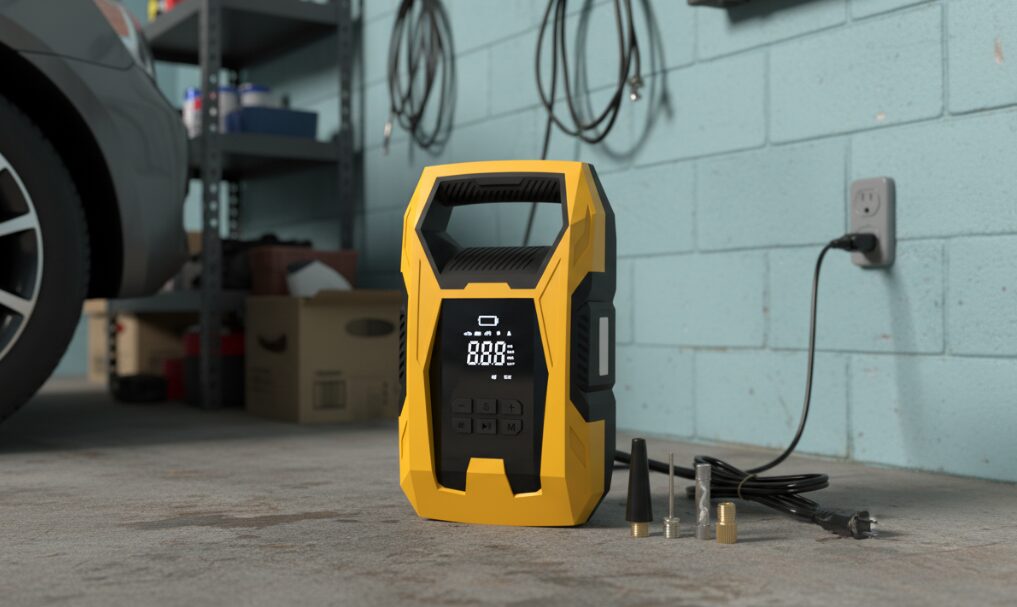
The first step is to find a mouth. After all, these products are designed for outdoor and roadside emergency, so almost all the interfaces have protective measures.
Protective rubber stopper: You will most likely find a small silicone cover on the side, bottom or handle of the machine. This is essential to prevent dust and moisture from entering the interface. My advice is to move gently when picking open, and don’t tear off the connection.
Identify the interface:
After the interface is exposed, the choice of charging equipment directly determines the health and charging speed of the battery. Although the box usually comes with the “original line”, if you lose it, you can use a third-party line, as long as the specifications meet the standards.
Voltage and current: The standard requirement for most lithium battery air pumps is 5V/2A. I must remind you here: don’t use the old “small square” charging head of 5V/1A mobile phone, it will be too slow to make you doubt your life.
Diversified charging scenarios:
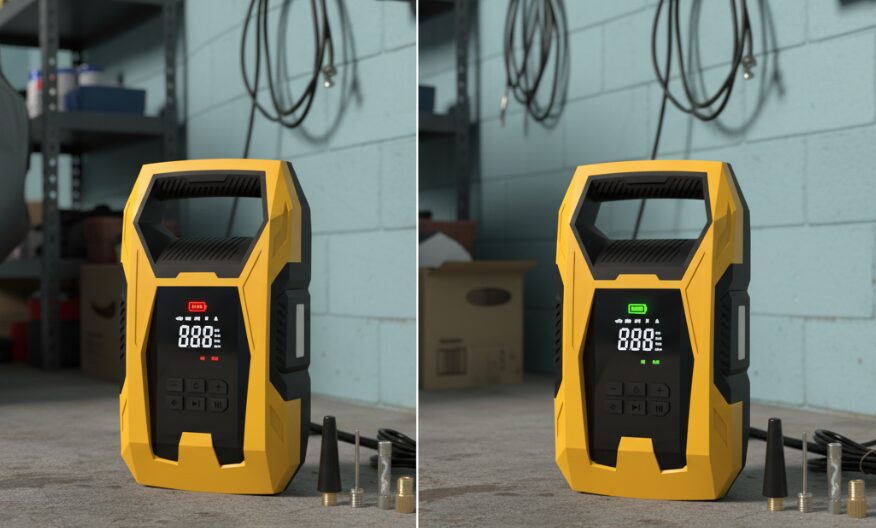
Visual feedback is the only way to judge progress. Although different brands have different color languages, the logic is basically the same:
Charging in progress: The LED light will usually flash (commonly red or blue). If your device has an LCD screen, you will see the number of bars in the battery icon cycle.
Charging is complete: The light stops flashing and turns on (usually green or blue). At this time, the battery cell on the screen will also be full and will no longer flash.
Charge the air pump with a little patience. A complete charging cycle takes about 3 to 5 hours. The length of this time depends on the mAh capacity of the battery and the power of your charging head. Unlike mobile phones that support tens of watts of fast charging, the lithium battery in the air pump is designed for “high-rate discharge” (driving the motor to work), not for “high-speed input”.
Tips from experts: When you see the green light on, pull out the thread and don’t hang there all the time. Although modern lithium batteries have protection circuits, overcharging is not good for long-term life. After charging, be sure to press the rubber protective plug tightly, otherwise the next time you go to sand or rainy days, the interface will be useless if it enters ash and water.
Basically can. Most modern USB-C interface inflator pumps have an internal pressure regulator. However, it will only ask for the maximum current it can withstand (usually 5V/2A), so you don’t sure where you can go with a 100W head.
Don’t be nervous, this is generally not a fault, but means that the battery is too low and is charging normally. Just wait until it turns green or always bright.
Although lithium batteries have anti-overcharge protection, my personal habit is to try to avoid overnight charging. For that point of battery life and safety factor, it is best to complete the energy supplement within the line of sight.
Author:Alex Turner
As an automotive tool specialist with over a decade of experience in roadside safety gear, I focus on testing and maintaining portable air compressors. I hope to provide clear, practical guides to keep your essential equipment powered and ready for the road.

Fix Car Vacuum Power And Suction Issues In 10 Minutes. Learn Diy Repair Tips For Motors And Filters To Save Money.
View details
Master How To Use A Portable Tire Inflator With Our Professional, Fail-Safe Guide For Roadside Safety And Accuracy.
View details
Learn How To Use A Car Vacuum Indoors With An Ac/Dc Adapter, Including Power Tips And Hygiene For Home Cleaning.
View details
Yes For Specific Tasks, But No For Tools. Learn Why Psi Vs. Cfm Matters And See The Full Yes/No List For Tire Inflators.
View details