 Carsun


How To Charge Tire Inflator
1113Learn How To Charge Tire Inflator Properly. Covers Usb Inputs, Interpreting Led Light Signals, And Typical 3-5 Hour Charging Times.
View detailsSearch the whole station
For vehicle performance, fuel economy and tire life, you must check and inflate at least once a month, and you must also check before long-distance travel. Even if your tires look good, or the TPMS (tire pressure monitoring system) light on the dashboard is not on, don’t take it lightly.
Tires lose about 1 to 2 PSI of pressure per month due to natural penetration. For every 10 degrees Fahrenheit (about 5.5 degrees Celsius) temperature drop, tire pressure will drop by another PSI. Inflation depends on the label value on the driver’s side door frame, not the maximum value on the tire sidewall. Maintaining the correct tire pressure can improve fuel consumption by 3% and avoid the risk of high-speed tire blowout.
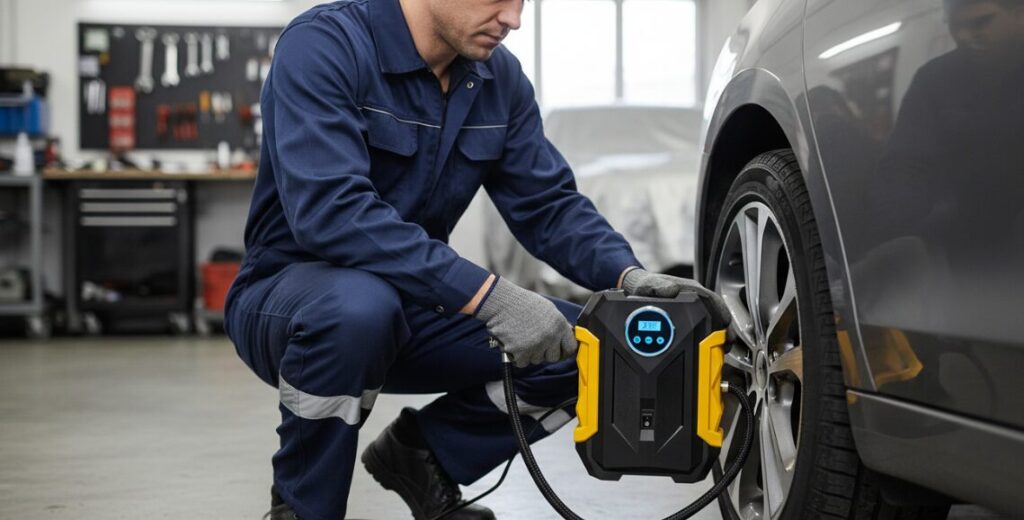
Many drivers have to wait for the warning light on the dashboard to come on before they think of inflating it. It is a mistake to rely too much on TPMS. Most systems will only alarm when the tire pressure is severely low (usually 25% lower than the recommended value). The tire has actually lost air for a long time. By insisting on monthly inspections, you can deal with these two “invisible killers” in advance:
The owner usually inflates the tires according to the numbers printed on them.

Although the monthly inspection is the benchmark, it must be measured once before running a long distance. Driving at high speed will generate a lot of heat. If your tires lose even a little bit of air, the sidewalls will bend excessively, and the heat generated can easily lead to catastrophic high-speed punctures.
Career advice: Be sure to check and adjust the pressure in a “cold” state (less than one miles) so that the measured data is the most accurate.
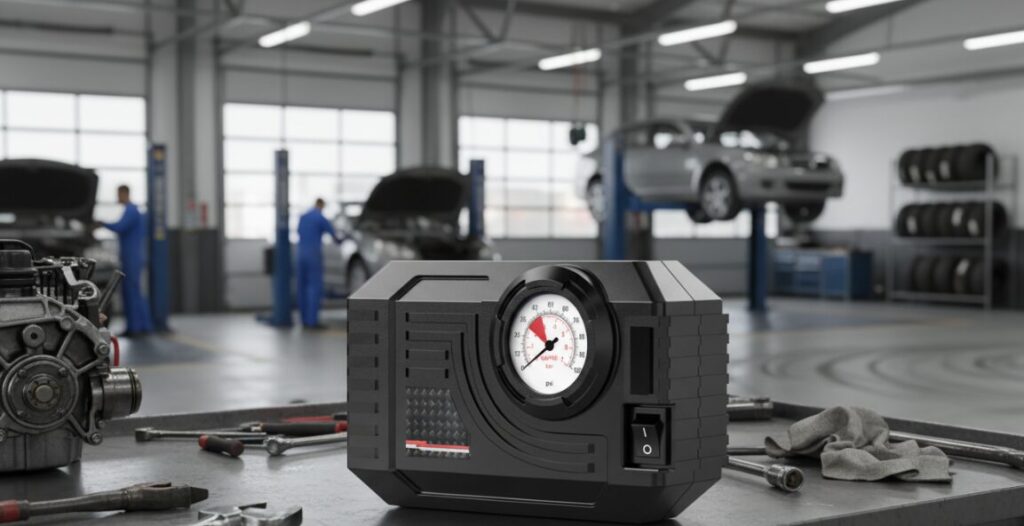
Don’t take inflation as a burden, this is actually the money-saving strategy:
Author: Mike Thompson
“With 13 years of hands-on experience in professional car repair under my belt, I’ve seen firsthand how small maintenance habits can prevent major road disasters. My mission is to translate complex mechanical knowledge into simple, actionable advice. I’m a firm believer that a well-maintained tire is the foundation of vehicle safety, and I’m here to help you maximize your car’s performance, one PSI at a time.”

Learn How To Charge Tire Inflator Properly. Covers Usb Inputs, Interpreting Led Light Signals, And Typical 3-5 Hour Charging Times.
View detailsLearn Why Car Vacuums Are Vital For Maintenance, The Ideal Suction Range, And How To Save On Detailing Costs.
View details
Late one evening, I noticed my car pulling to one side. At the next stop, I checked and found my tires under-inflated. A small leak had made the drive rough and unsafe. I remembered struggling before with an inflatable tire at home, using a ha...
View details
Step-By-Step Guide On How To Use An Auto Air Tire Inflator. Connect To 12v, Check Psi, And Inflate Tires Safely In Minutes.
View details