 Carsun


How Do Portable Tire Inflators Work
701Learn How Portable Tire Inflators Work, From Energy Conversion And Pistons To Automatic Pressure Shut-Off Sensors.
View detailsSearch the whole station
To use a portable tire inflator, first of all, the car must be parked on the flat ground and the handbrake must be applied. The key point: the engine must keep running. Next, find the recommended tire pressure value for your car (usually on the sticker on the B- pillar in the driver’s seat) and unscrew the valve cap. Press the inflation pipe connector tightly and lock it immediately after hearing the “hissing” 1 sound. The target PSI is preset on the digital display screen of the air pump.Press the switch, people don’t run far, keep an eye on whether it is overheated, and when it stops automatically, remove the joint and screw back the valve cap. Finally, I suggest retesting with an independent tire pressure gauge, which is the safest.

Be sure to find flat ground. If the car is parked on a slope, the uneven weight distribution will cause slight deviations in the sensor readings. It is necessary to pull the handbrake. Don’t wait for the car to slide while you are busy at the wheel.
This portable air pump works when the current is very large. In order to protect the batteries, especially those that have been used for two or three years, I strongly recommend that the engine catch fire when charging. In this way, the generator can provide stable voltage, and the compressor of the air pump is more vigorous and faster.
If you want to be professional, you must first look at the data in the instructions.
Don’t look at the PSI marked on the side of the tire! That is the ultimate pressure that the tire can withstand, not the recommended pressure for driving. The correct way is to open the cab door and look at the yellow and white sticker on the B- pillar or door frame, which clearly reads the “cold tire pressure” recommended by the original factory for the front and rear wheels “.
Unscrew the plastic dust cap and keep it in your pocket or in a secure place. If the valve core enters the soil or gets wet, it will slowly begin to leak.
The connection must be tightly sewn to ensure that air is entering the tire, not leaking into the atmosphere.
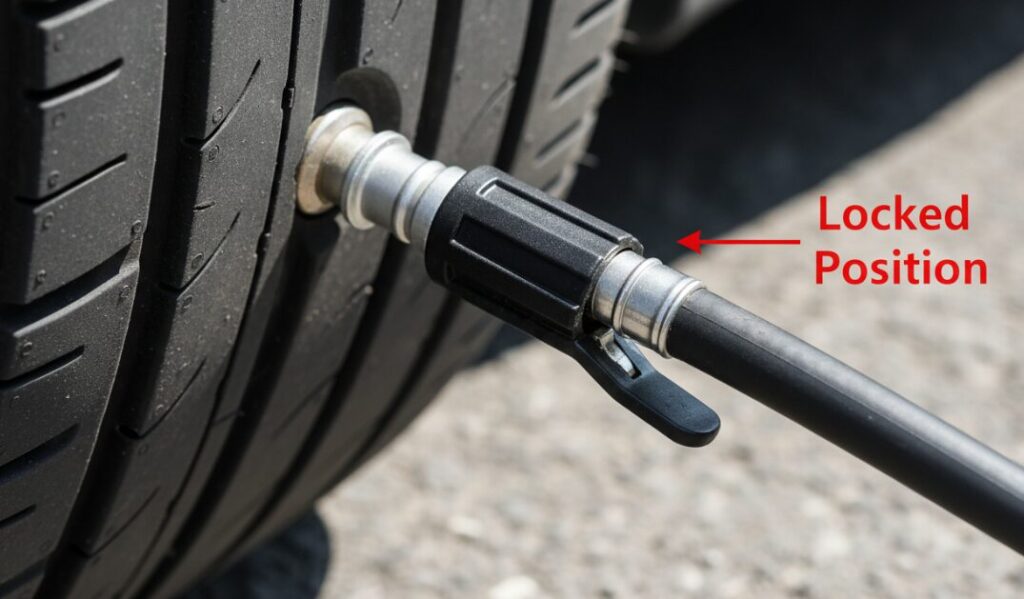
Hold the inflation hose connector and press firmly on the valve. You will hear a short “hissing” sound, which is the sound of the valve core being pushed open, normal phenomenon. Quickly press down the locking lever (or tighten the threaded joint). If you hear the sound of air leakage all the time, it means that you have not received it correctly. Pull it out and press it again.
Now the machine is basically digital, easy to operate, but not careless.
Use the “-” sign on the screen to enter the value you just saw on the doorpost sticker. The best design of the modern air pump is to automatically charge and stop, and when it counts, it will rest on its own without worrying about filling and bursting the tire.
After pressing the start button, people have to stay by the side. These small pumps are very hot at work. If you fill several tires in a row, or inflate a large SUV, remember to touch the fuselage. If it is too hot, turn it off for a few minutes to protect the sealing ring inside, otherwise the machine will have to be scrapped after several times.

The last few steps determine whether you can do this job well or not.
After the machine stops, quickly break the locking lever and unplug the joint to minimize air leakage, and then quickly screw the valve cap back.
Although the air pump comes with a digital display, my personal professional habit is to measure it with a high-quality independent tire pressure gauge. Electronic sensors sometimes have zero drift. A retest can ensure absolute accuracy of tire pressure, which is only good for saving fuel and prolonging tire life.
Author: James Carter
“Hi, I’m an automotive maintenance specialist with over a decade of hands-on experience in vehicle safety and roadside assistance. My mission is to empower drivers with the technical knowledge needed to handle unexpected car issues with confidence. In this guide, I share my professional, fail-safe framework for using portable tire inflators—ensuring you can maintain optimal tire pressure and stay safe on the road, no matter where your journey takes you.”

Learn How Portable Tire Inflators Work, From Energy Conversion And Pistons To Automatic Pressure Shut-Off Sensors.
View details
Learn How To Use A Car Vacuum Indoors With An Ac/Dc Adapter, Including Power Tips And Hygiene For Home Cleaning.
View details
Learn How To Charge Tire Inflator Properly. Covers Usb Inputs, Interpreting Led Light Signals, And Typical 3-5 Hour Charging Times.
View details
Fix Car Vacuum Power And Suction Issues In 10 Minutes. Learn Diy Repair Tips For Motors And Filters To Save Money.
View details